

Article Overview
UK Self Sponsorship Visa Cost in 2026: Complete Guide for Entrepreneurs and Overseas Applicants
UK Self Sponsorship has become one of the most discussed UK immigration pathways for entrepreneurs, business professionals, consultants, and overseas applicants looking for greater flexibility and long-term opportunities in the United Kingdom.
Unlike traditional work visa routes where applicants depend entirely on an employer to provide sponsorship, self sponsorship allows individuals to establish or operate a UK business and sponsor themselves legally through that company under the Skilled Worker route.
One of the first questions most applicants ask is:
“How much does UK Self Sponsorship actually cost in 2026?”
The answer depends on several factors including:
company setup
sponsor licence preparation
visa duration
compliance requirements
business operations
family applications
legal or consultancy support
Some people assume the process only involves opening a UK company and applying for a visa. In reality, the UK Home Office carefully assesses whether the business is genuine, operational, and capable of meeting sponsorship obligations.
This means applicants should prepare not only for visa fees but also for proper business and compliance-related costs.
In this guide, we explain the realistic UK Self Sponsorship costs in 2026 and what overseas applicants should understand before starting the process.
What Is UK Self Sponsorship?
UK Self Sponsorship is not a separate official visa category. It is a legal immigration strategy commonly used by entrepreneurs and professionals who want to move to the UK through their own business structure.
In simple terms, the process usually works like this:
A UK company is established or acquired
The company applies for a Sponsor Licence
The business becomes authorised to sponsor workers
The applicant is sponsored through their own company under the Skilled Worker route
The applicant relocates to the UK to actively work within the business
This pathway has become increasingly popular among:
entrepreneurs
consultants
overseas business owners
skilled professionals
technology specialists
investors
experienced managers
Many applicants prefer this route because it offers more independence and flexibility compared to relying entirely on external employers.
Why Understanding the Full Cost Matters
One of the biggest mistakes applicants make is focusing only on:
visa fees
company registration
sponsor licence charges
In reality, UK Self Sponsorship involves several stages, and each stage may include additional operational and compliance costs.
The UK Home Office expects sponsoring businesses to demonstrate:
genuine commercial activity
operational readiness
proper compliance systems
financial credibility
sponsorship capability
Weak planning or unrealistic setups can lead to:
sponsor licence refusals
visa delays
compliance issues
unnecessary financial losses
Understanding the complete financial picture from the beginning helps applicants plan more effectively and avoid major surprises later.
Main Costs Involved in UK Self Sponsorship
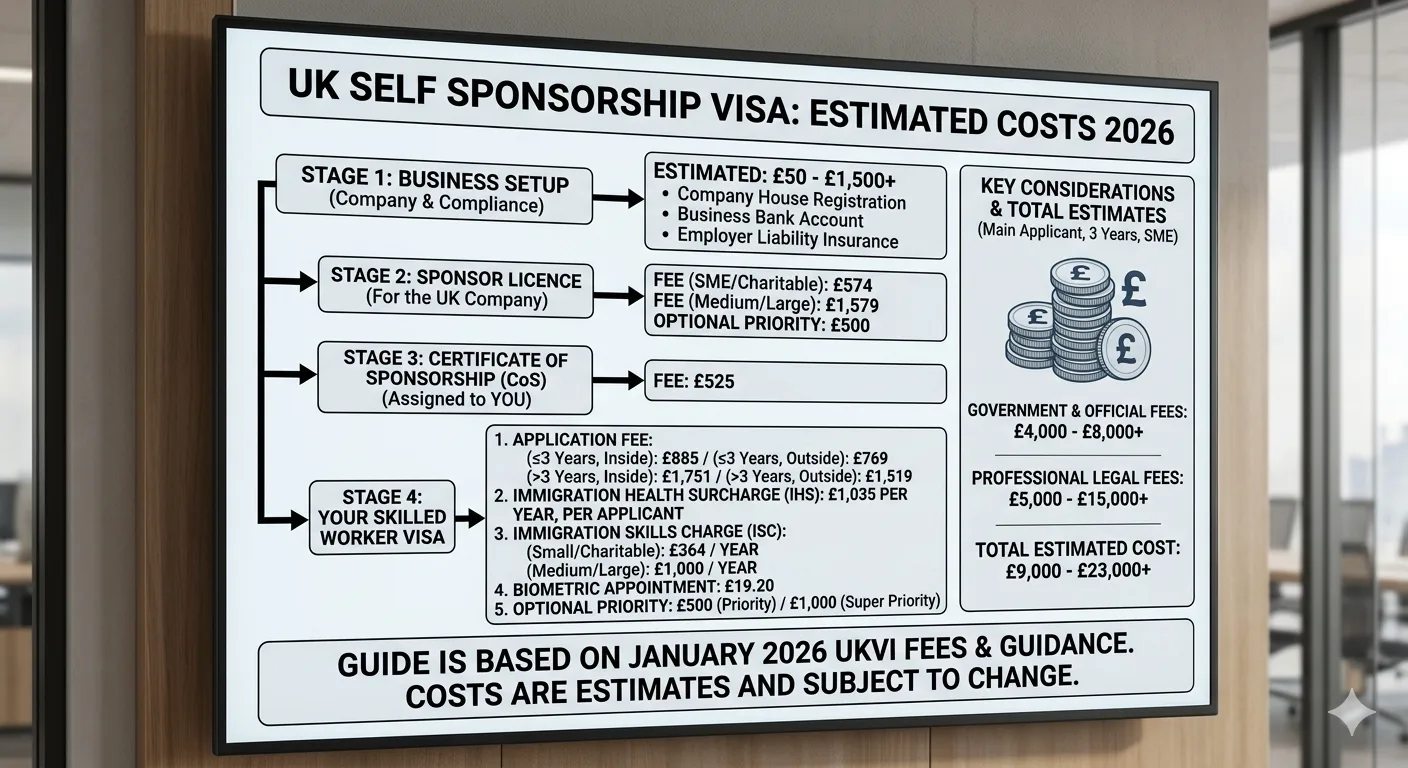
Below is a realistic breakdown of the major expenses applicants may encounter during the process.
1. UK Company Formation Costs
The first stage usually involves establishing a UK limited company or purchasing an existing business.
Basic setup expenses may include:
UK company registration
registered office address
business website
professional email setup
accounting support
branding
banking assistance
operational preparation
Some applicants choose simple business structures, while others invest more depending on the nature of the business.
Estimated Costs
Approximate range:
£100 – £2,000+
The final amount depends on:
business type
operational complexity
whether a new or existing business is used
level of professional support required
Applicants acquiring operational businesses may spend significantly more.
2. Sponsor Licence Application Fee
To legally sponsor yourself under the Skilled Worker route, the company must obtain a Sponsor Licence from the UK Home Office.
The official fee depends on the company size.
Current Estimated Fees
Small Company
Approximately:
£536
Medium or Large Company
Approximately:
£1,476
The Home Office carefully assesses whether the company is genuine and capable of meeting sponsorship responsibilities.
Poorly prepared applications can result in refusal, which is why many businesses invest additional time and resources into compliance preparation before applying.
3. Compliance Preparation Costs
This is one of the most important — and often underestimated — parts of the process.
The UK Home Office expects sponsoring businesses to maintain proper:
HR systems
employee records
reporting procedures
sponsor management systems
compliance policies
right-to-work checks
Many sponsor licence applications face problems because businesses are not operationally prepared.
Businesses often invest in:
compliance documentation
internal procedures
legal reviews
HR preparation
sponsor management setup
Estimated Costs
Approximate range:
£500 – £5,000+
This depends on:
business structure
operational complexity
industry type
professional support used
4. Skilled Worker Visa Fees
Once the Sponsor Licence is approved, the applicant can proceed with the Skilled Worker visa application.
Typical visa-related costs may include:
visa application fee
biometrics
translation expenses
document preparation
priority processing (if selected)
The final amount depends on:
visa duration
application country
number of dependants
Estimated Costs
Approximate range:
£700 – £1,500+
Family applications can increase overall costs significantly.
5. Immigration Health Surcharge (IHS)
The Immigration Health Surcharge is one of the largest expenses many applicants underestimate.
This payment gives visa holders access to the UK’s National Health Service (NHS).
The surcharge is generally paid for every year of the visa.
Example
Longer visa durations and dependant applications can substantially increase the total amount.
Estimated Costs
Approximate range:
£2,000 – £5,000+
Larger family applications may exceed this estimate.
6. Immigration Skills Charge
In many cases, the sponsoring business must also pay the Immigration Skills Charge.
This charge depends on:
company size
sponsorship duration
Estimated Costs
Approximate range:
£364 – £1,000+ per sponsored year
This payment is usually made by the sponsoring company.
7. Professional Consultancy or Legal Fees
Many applicants choose professional guidance because UK Self Sponsorship combines:
immigration law
sponsor licence compliance
business setup
operational planning
documentation strategy
Professional support may help reduce mistakes that can lead to delays or refusals.
Support services may include:
business planning
sponsor licence assistance
compliance preparation
visa support
document review
operational structuring
The cost varies depending on:
complexity of the case
number of dependants
business type
level of support required
8. Business Operating Costs in the UK
Applicants should remember that the UK business must operate genuinely.
The Home Office expects businesses to show real commercial activity.
Potential operational expenses may include:
accounting services
office costs
software subscriptions
marketing
staffing
insurance
administrative support
An inactive company can create serious problems during compliance checks or future visa extensions.
Estimated Total UK Self Sponsorship Cost in 2026
For many applicants, realistic total costs may fall somewhere between:
Approximate Overall Range
£8,000 – £20,000+
More complex cases involving:
family dependants
larger business operations
existing business acquisitions
advanced compliance structures
may exceed this estimate.
The exact amount depends heavily on:
business model
visa duration
operational setup
dependants
compliance planning
professional support
Can Family Members Be Included?
Yes.
Eligible dependants such as:
spouses
children
can usually apply alongside the main applicant under the Skilled Worker route.
Additional expenses may include:
dependant visa fees
additional IHS payments
accommodation costs
schooling considerations
relocation expenses
For many families, this route provides long-term relocation and settlement opportunities in the UK.
Common Financial Mistakes Applicants Make
Many applicants underestimate the importance of:
compliance preparation
operational credibility
realistic business activity
Some common mistakes include:
opening inactive companies
weak business planning
unrealistic financial assumptions
poor operational evidence
rushing sponsor licence applications
relying on shortcuts
The Home Office carefully reviews whether the business is genuine and capable of meeting sponsorship responsibilities.
Proper preparation significantly improves long-term success chances.
Is UK Self Sponsorship Worth It?
For many entrepreneurs and business professionals, yes.
This route can provide:
greater control over your immigration pathway
business ownership opportunities
long-term UK presence
flexibility compared to traditional sponsorship
potential settlement pathways
opportunities for family relocation
However, applicants should approach the process realistically.
Self sponsorship is not simply about opening a company on paper. The business should be genuine, properly structured, and operationally credible.
Applicants who prepare carefully from the beginning usually experience a much smoother process.
Why Professional Guidance Matters
Many applicants underestimate how strict sponsor licence compliance can be.
Even businesses with genuine intentions sometimes face refusals because:
documentation is weak
compliance systems are incomplete
operational evidence is insufficient
business activity appears unrealistic
Professional guidance can help applicants:
structure the process properly
understand sponsorship duties
prepare better-organised applications
avoid costly mistakes
improve compliance readiness
A well-prepared case usually creates stronger long-term results.
Final Thoughts
UK Self Sponsorship continues to attract growing interest from entrepreneurs, consultants, and overseas professionals looking for long-term opportunities in the United Kingdom.
While the overall investment can appear significant initially, proper planning helps applicants avoid unnecessary delays, compliance problems, and financial mistakes.
Understanding the complete cost structure before starting is extremely important.
Applicants should carefully consider:
company setup
sponsor licence preparation
operational planning
visa expenses
compliance obligations
long-term business management
A structured strategy from the beginning can make the entire process significantly smoother and improve overall success chances.
Frequently Asked Questions
Is UK Self Sponsorship officially recognised?
The term “self sponsorship” commonly describes a legal strategy involving a UK business, Sponsor Licence, and Skilled Worker visa.
Can overseas applicants apply?
Yes. Many applicants begin the process while living outside the UK.
Do I need business experience?
Business experience can help, but the most important factor is having a genuine and realistic business structure.
Can I buy an existing UK company?
Yes. Some applicants choose to acquire existing operational businesses instead of creating new companies.
Can family members apply with me?
Yes. Eligible dependants can usually apply alongside the main applicant.
Is IELTS required?
English language requirements generally apply under the Skilled Worker route.
Can the business operate remotely?
This depends on the business model and operational structure. Genuine business activity remains important.
Is sponsor licence approval guaranteed?
No. The Home Office carefully reviews every application.
Can this route lead to settlement?
Some applicants may become eligible for settlement pathways in the future depending on immigration rules and eligibility requirements.
How long does the process usually take?
The timeline varies depending on company setup, sponsor licence approval, and visa processing stages.
General information only: Immigration, visa, citizenship and licensing rules can change. This article is not a guarantee of eligibility or outcome and is not a substitute for checking the current official rules for your circumstances. The relevant authority makes the final decision.