
Article Overview
For most migrants, British citizenship is the final step after Indefinite Leave to Remain (ILR). Citizenship gives you a British passport, the right to vote in all UK elections and full security of status. The application is made by naturalisation, and it has its own requirements that are separate from ILR. This guide explains them.
When can you apply?
- Most applicants: 12 months after receiving ILR, provided you have lived in the UK for at least five years before applying.
- Spouses and civil partners of British citizens: as soon as you receive ILR, provided you have at least three years of residence in the UK.
Residence and absence rules
For the standard five-year route, you must generally:
- have been physically present in the UK on the date five years before your application;
- have spent no more than 450 days outside the UK in the five-year period;
- have spent no more than 90 days outside the UK in the final 12 months;
- not have breached immigration laws during the qualifying period.
For spouses of British citizens on the three-year route, the limits are lower, usually 270 days over three years and 90 days in the last year. The Home Office can use discretion for excess absences in some cases, but you should explain them clearly.
Good character
You must show good character. The Home Office considers criminal convictions, immigration breaches, deception in previous applications, financial issues such as unpaid tax or bankruptcy, and other conduct. You must declare everything honestly, including cautions, fixed penalty notices in some cases and matters outside the UK.
Knowledge of English and life in the UK
- English: usually level B1 or higher, through an approved test or a degree taught in English. If you met the requirement for ILR, the same evidence may often be used.
- Life in the UK test: if you passed it for ILR, you do not need to take it again.
Applicants aged 65 or over, and those with certain long-term conditions, may be exempt.
Referees
You need two referees who have known you for at least three years. One must be a professional person, for example a doctor, lawyer, teacher or accountant, and the other usually must be a British citizen aged over 25. Referees must not be related to you or to each other.
The application steps
- Check your residence dates and absences carefully.
- Gather documents: passport, ILR evidence, English and Life in the UK certificates, and any documents explaining absences.
- Complete the online application and pay the fee.
- Arrange your referees' declarations.
- Give biometrics at a UK service point.
- Wait for the decision, which often takes several months.
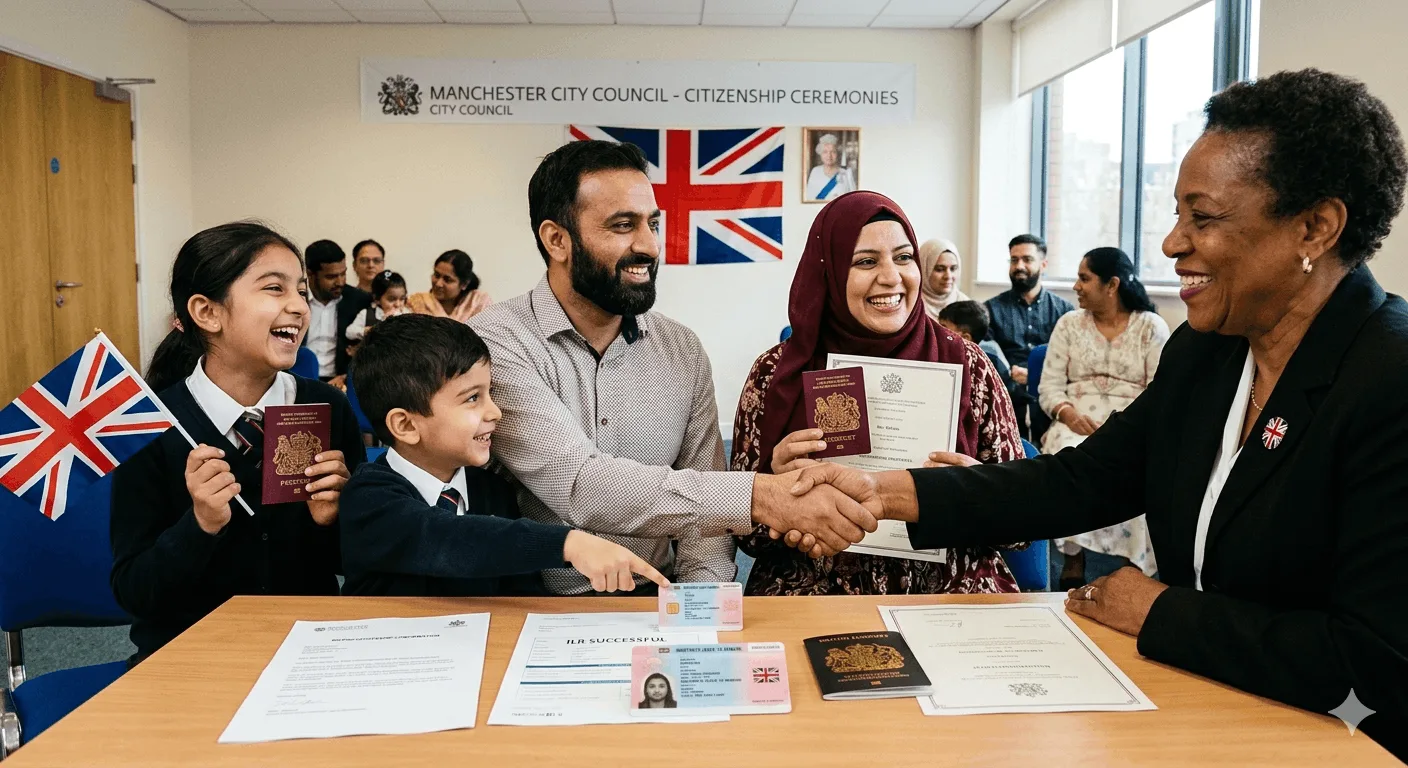
- Attend your citizenship ceremony and take the oath or affirmation.
After the ceremony
You receive your certificate of naturalisation at the ceremony. You can then apply for a British passport. Check whether your country of origin allows dual citizenship; Pakistan has dual nationality arrangements with the UK, but you should confirm the current rules and any registration needed with Pakistani authorities.
Children
Children born in the UK after a parent receives ILR are usually British automatically. Other children may be registered as British citizens under separate rules.
Common mistakes
- Miscalculating the five-year qualifying date or absences.
- Not declaring old convictions, penalties or immigration issues.
- Choosing referees who do not meet the requirements.
- Applying before 12 months have passed since ILR when that rule applies.
How ZANS Consultants can help
We check your eligibility, calculate your residence and absences and prepare your naturalisation application. Learn more about our UK Settlement and British Citizenship service, read our guide to Indefinite Leave to Remain, or book a consultation.
General information only: nationality rules and fees change. Check the current GOV.UK guidance before you apply. The Home Office makes the final decision on every application.