
Article Overview
If you are visiting family or friends in the UK, an invitation letter from your host is one of the most useful supporting documents. It is not compulsory, but a clear, honest letter helps the officer understand who you are visiting, why, where you will stay and who is paying. This guide explains what a strong letter contains and which documents should go with it.
Who should write the letter?
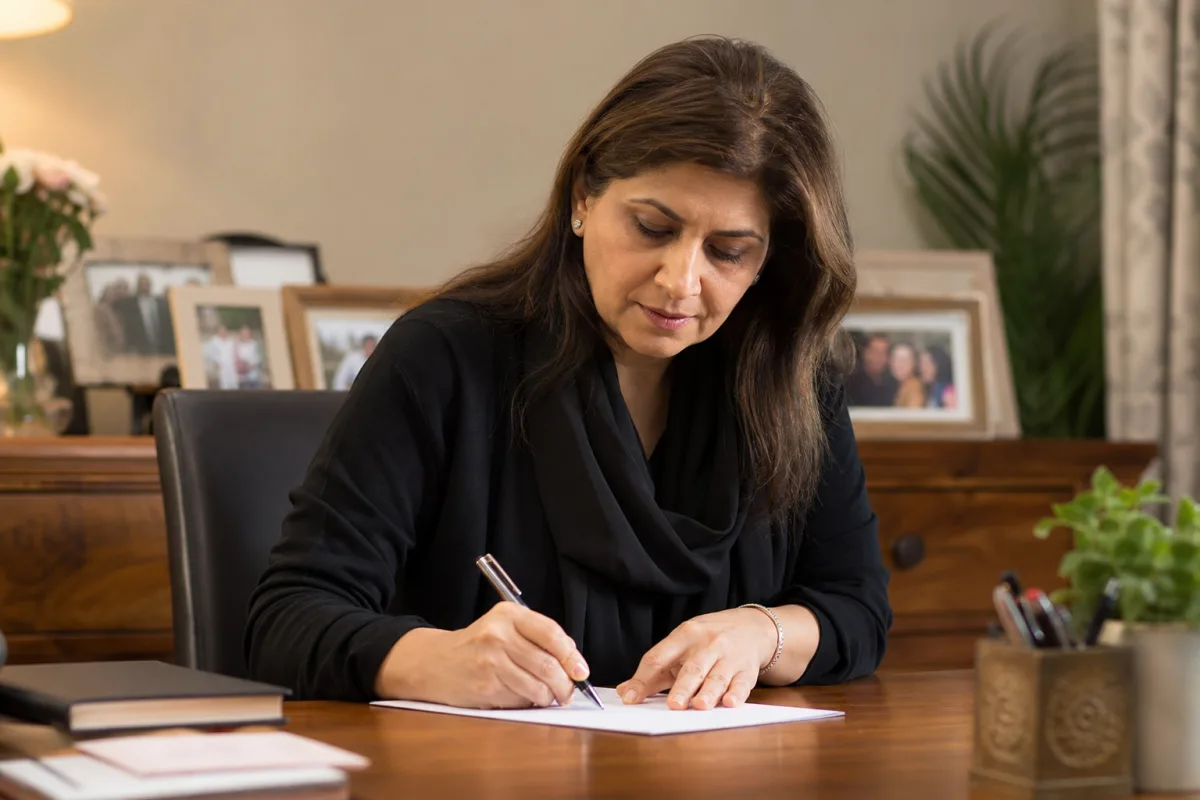
The letter should come from the person you will visit or stay with, usually a relative or friend who is British, settled in the UK, or living in the UK on a valid visa. If more than one person is involved, for example one host provides accommodation and another pays for the trip, each can write a short letter explaining their role.
What to include
- The host's full details: full name, date of birth, address in the UK, phone number and email.
- The host's status in the UK: British citizen, settled, or the type of visa they hold, with its expiry date.
- The host's occupation: job title and employer, or business details if self-employed.
- Your relationship: how you are related or how you know each other, and for how long.
- The purpose of the visit: for example a family holiday, a wedding, the birth of a child or a graduation.
- Dates: the planned arrival and departure dates and the length of stay.
- Accommodation: whether you will stay at the host's home, and whether there is enough space.
- Who pays: whether the host will cover some or all costs, such as flights, accommodation and daily expenses.
- A statement about returning: confirmation that the host understands you will return home at the end of the visit.
- Signature and date.
Documents to attach
- A copy of the host's passport bio page, and proof of status, such as a share code, eVisa or biometric details.
- Proof of address, such as a recent council tax bill or utility bill.
- If the host is paying: recent bank statements and payslips or business accounts.
- If you are staying at their home: a tenancy agreement or proof of ownership, if helpful to show there is enough space.
- Evidence of the relationship, such as family registration documents, birth or marriage certificates.
Writing tips
- Keep it factual and simple. Officers prefer clear information to emotional language.
- Make sure every date and detail matches your visa application form.
- Do not exaggerate the host's finances or promise things that are not true.
- If you will also pay part of the trip yourself, say so; it shows you have your own means.
What the letter cannot do
An invitation letter supports your application, but it cannot replace your own evidence. The officer will still look at your circumstances in Pakistan: your job or business, your family ties and your own financial situation. A strong letter with weak personal evidence often still leads to refusal. Read our guide to UK visitor visa requirements from Pakistan for the full picture.
Sample structure
A simple letter usually follows this order: an opening line saying who you are inviting and why; a paragraph about your status, job and address; a paragraph about the relationship; a paragraph about dates, accommodation and costs; a closing line confirming the visitor will return home; then your signature, printed name and date.
How ZANS Consultants can help
We review invitation letters and supporting documents before you apply, so that the host's and visitor's evidence fit together. Learn more about our UK Visitor Visa service, see common refusal reasons, or book a consultation.
General information only: visitor rules change. Check the current GOV.UK guidance before you apply. The Home Office makes the final decision on every application.